
Four proven ways to close postoperative survey gaps and collect more complete outcomes data.
The most effective ways to improve PROMs survey capture rates are to educate patients, monitor the correct patient population, confirm contact preferences and prevent survey fatigue. These practices become especially important after surgery, when patients have fewer touchpoints with the hospital but may still need to complete surveys months later. The THA/TKA PRO-PM is a good example, as its required one-year postoperative survey presents one of the most significant capture challenges.
Maintaining a strong survey capture rate takes more than sending automated reminders. For more than a decade, CODE has studied patient survey-taking behavior, conducted extensive A/B testing and used the findings to continually refine how patient-reported outcome measures are administered.
Patient communication habits continue to evolve. Successful PROMs programs must evolve with them. These four practices are an important place to start.
1. Educate Patients and Make Their Results Meaningful
Patients are more likely to complete a patient-reported outcome survey when they understand what it measures, why it matters and how their responses will be used.
Introduce PROMs during preoperative education and reinforce their purpose throughout the perioperative journey. Staff should also understand the program so patients receive a clear, consistent explanation at every touchpoint.
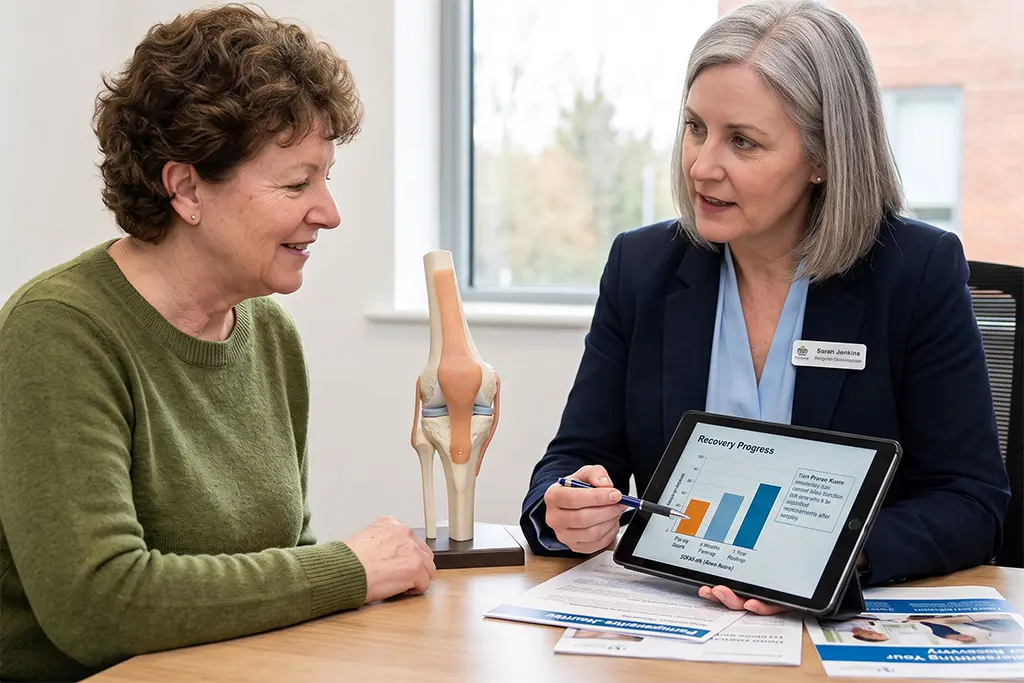
When possible, share patients’ KOOS-JR or HOOS-JR results with them. Explain:
- Their preoperative score
- How that score compares with expected function
- The improvement typically expected three months and one year after surgery
Seeing their progress gives patients a personal reason to participate. Instead of viewing each survey as another administrative request, they can see it as a meaningful record of their recovery.
For THA/TKA programs, this early education can directly support one-year postoperative capture. Patients who understand from the beginning that follow-up will continue long after surgery may be more likely to recognize and complete the survey when it arrives. Set that expectation before surgery, reinforce it during postoperative touchpoints and remind patients that the one-year survey is an important part of measuring their recovery.
2. Track Capture Rates Using the Correct Denominator
You cannot improve a PROMs survey capture rate unless you can measure it accurately.
Establish a reporting process that makes it easy to review capture rates, identify gaps and monitor trends over time. Just as importantly, clearly define which patients belong in the denominator.
This is a common source of misleading results. For example, a report may show an 80% capture rate while including only patients enrolled in an online patient portal. If all eligible THA/TKA patients are added to the denominator—including those who are not active portal users—the actual capture rate may be considerably lower.
Your reporting should answer more than, “How many surveys did we receive?” It should show:
- The complete eligible patient population
- Patients with completed preoperative surveys
- Patients approaching or already within the applicable postoperative collection window, e.g., the 300-to-425-day window for the THA/TKA PRO-PM one-year survey
- Missing surveys and required clinical data
- Complete, measure-eligible matched pairs
A high survey count does not necessarily mean a high CMS-eligible matched-pair rate. Both should be monitored. This is particularly important as THA/TKA patients approach the one-year postoperative survey window. Teams need enough visibility to identify missing responses and intervene before the collection opportunity closes.
Check out our THA/TKA PRO-PM Complete Resource for additional details on capture requirements, matched pairs and reporting preparation.
3. Verify Contact Information and Patient Preferences
The contact information in the medical record may not be the information a patient wants used for PROMs outreach.
During patient education or registration, ask each patient:
- How they prefer to receive their surveys
- How they prefer to receive follow-up reminders
- Which email address they check most frequently
- Whether their mobile number and other contact information are current
A patient may want clinical information delivered through one channel but prefer survey reminders through another. Capturing and honoring those preferences can make outreach more effective while creating a better patient experience.
4. Audit for Duplicate Surveys and Survey Fatigue
Patients are routinely asked to complete surveys about nearly every healthcare interaction. Duplicate or poorly coordinated requests can quickly create survey fatigue and lower response rates.
Regularly audit the patient experience for:
- Exact duplicate surveys
- Similar surveys sent by different departments
- Overlapping survey schedules
- Unnecessary or excessive reminders
- Surveys sent outside the appropriate collection window
When duplication or over-surveying is identified, address it promptly. A coordinated survey strategy protects the patient relationship and increases the likelihood that patients will complete the surveys that matter most.
Improving Capture Rates Requires Continuous Management
PROMs survey capture is not a one-time implementation project. It requires ongoing patient engagement, accurate eligibility logic, multichannel outreach, real-time monitoring and intervention when responses are missing.
The postoperative period presents a particular challenge. Once patients leave the hospital and routine touchpoints become less frequent, maintaining engagement becomes more difficult. For THA/TKA programs, teams must be able to identify patients approaching the one-year follow-up window, reach them through the right channels and intervene before the opportunity to complete a CMS-eligible matched pair is lost.
Technology makes that work more scalable, but technology alone does not manage the entire process. CODE combines its purpose-built PROMs platform with clinical expertise and dedicated operational support to manage patient outreach, monitor collection performance and turn completed surveys into usable, reporting-ready data.
Is Your One-Year Capture Rate on Track?
Can you see which THA/TKA patients are approaching the one-year postoperative survey window—and which completed surveys are becoming CMS-eligible matched pairs?
Talk with CODE about your current PROMs workflow and identify where patients, surveys or required data may be falling through the cracks.
Improve Your PROMs Survey Capture Rate
Not sure whether your current capture rate reflects all eligible patients—or whether completed surveys are becoming complete matched pairs?
Talk with CODE about your current PROMs workflow and identify where patients, surveys or required data may be falling through the cracks.
Request a Review of Your PROMs Capture Process
Frequently Asked Questions
What is a PROMs survey capture rate?
A PROMs survey capture rate is the percentage of eligible patients who complete a required patient-reported outcome survey during the specified collection period. The calculation should include the complete eligible population—not only patients enrolled in a portal or reached through a particular communication channel.
How can hospitals improve PROMs survey response rates?
Hospitals can improve response rates by educating patients about the value of PROMs, verifying communication preferences, using multiple outreach channels, monitoring missing surveys and reducing duplicate or unnecessary survey requests.
Why is the denominator important when calculating capture rate?
The denominator defines the total eligible patient population. If it excludes patients who are not enrolled in a portal or missing from a particular workflow, the reported capture rate may appear much higher than the organization’s actual performance.
Are completed surveys the same as CMS-eligible matched pairs?
No. A completed survey is only one component of a matched pair. Measure-eligible matched pairs also depend on properly timed preoperative and postoperative surveys, accurate patient matching and completion of other required data elements.
How often should PROMs capture rates be reviewed?
Organizations should monitor capture performance throughout the collection cycle, not only near a reporting deadline. Regular review allows teams to identify missing surveys, correct contact information and intervene while patients are still within the applicable survey window.