AAHKS 2016 – Day 2

A green slide titled Paper 3 summarizes a study on knee arthroplasty. The key message states: High expectations in pre-op equal higher function post-op, but do not predict satisfaction; PROs validate research findings.

The second day of AAHKS was all about abstract presentations. We curated a selection of papers whose authors either utilized PROs to validate their research, or their paper addressed cost issues, outcomes, risk adjustments, or bundled payments. We shared what we took away as the key message of each paper, but you can also follow the links to read the full abstract.

Paper 3: Relationship Between Patient Expectations, Patient Satisfaction, and Patient Reported Outcomes in Total Knee Arthroplasty Patients: A Prospective Multi-Center Study


Green slide with white text summarizing a medical study. Key message: Conversion total hip arthroplasty (THA) has more complications and longer hospital stays than primary THA; PROs validate research on increased resource use.

Paper 9: Alternative Payment Models Should Risk-Adjust for Conversion Total Hip Arthroplasty: A Propensity Score-Matched Study


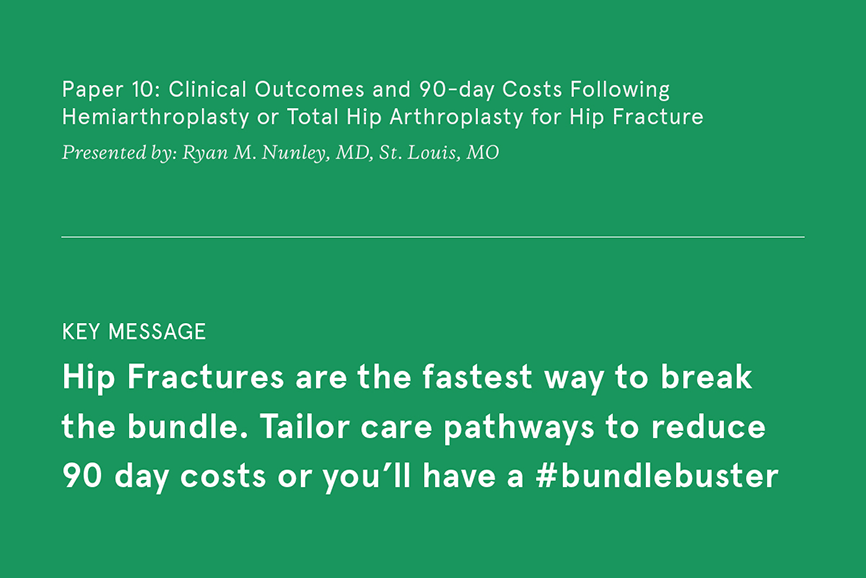
A green slide summarizes a clinical paper on hip fractures, highlighting that PROs validate research showing hip fractures quickly increase costs. It advises tailoring care pathways to reduce 90-day costs or risk a โ€œ#bundlebuster.โ€.

Paper 10: Clinical Outcomes and 90-day Costs Following Hemiarthroplasty or Total Hip Arthroplasty for Hip Fracture


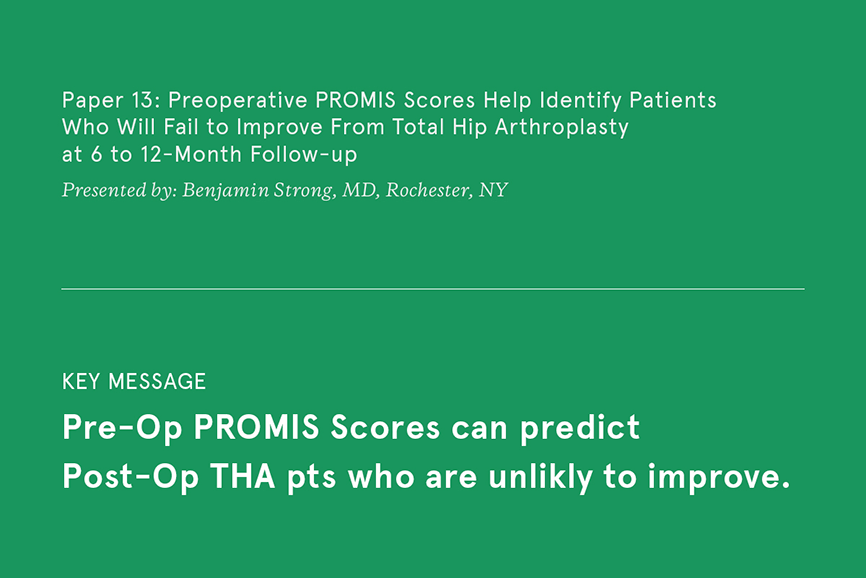
A green slide shows a study summary: Pre-op PROMIS scores help predict which total hip arthroplasty patients may not improve at 6โ€“12 months. Key message underscores how PROs validate research on poor post-op outcomes.

Paper 13: Preoperative PROMIS Scores Help Identify Patients Who Will Fail to Improve From Total Hip Arthroplasty at 6 to 12-Month Follow-up


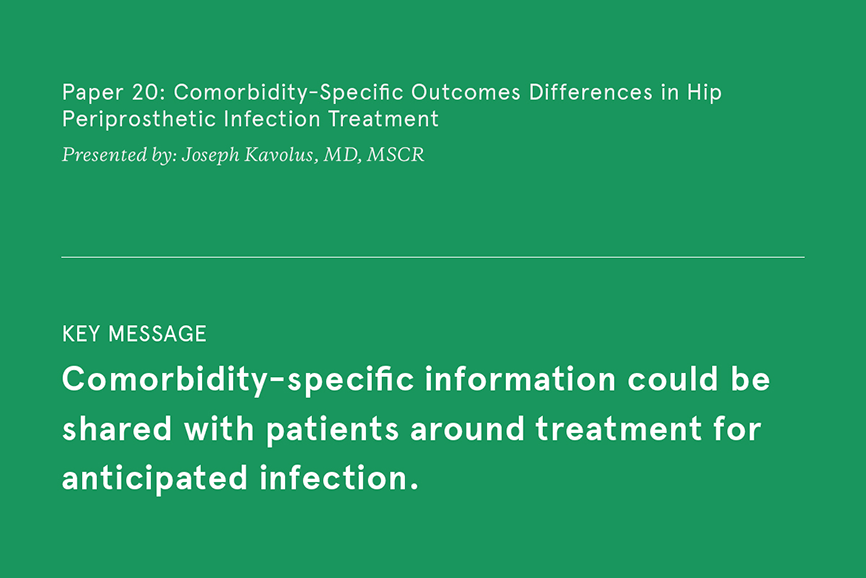
A green slide titled Paper 20: Comorbidity-Specific Outcomes Differences in Hip Periprosthetic Infection Treatment, presented by Joseph Kavolus, MD, MSCR. Key message: PROs validate research showing comorbidity-specific information aids infection treatment decisions.

Paper 20: Comorbidity-Specific Outcomes Differences in Hip Periprosthetic Joint Infection Treatment


Slide summarizing Paper 22: Modifiable risk factors increase 90-day cost of care and length of stay in primary joint arthroplasty. PROs validate research, highlighting significant impact on TJA duration. #bundlebuster.

Paper 22: Modifiable Risk Factors in Primary Joint Arthroplasty Increase 90-day Cost of Care


A green slide summarizes a medical study on total knee arthroplasty, highlighting significant variability in complication data between databases and emphasizing how PROs validate research findings.

Paper 23: Analysis of Outcomes Following Total Knee Arthroplasty: Do All Databases Produce Similar Findings?


A presentation slide titled: Paper 24โ€”Can an Arthroplasty Risk Score Predict Bundled Care Events after Total Joint Arthroplasty? Key message: Use PROs to validate research predicting LOS in TJA patients with a validated risk score.

Paper 24: Can an Arthroplasty Risk Score Predict Bundled Care Events after Total Joint Arthroplasty?
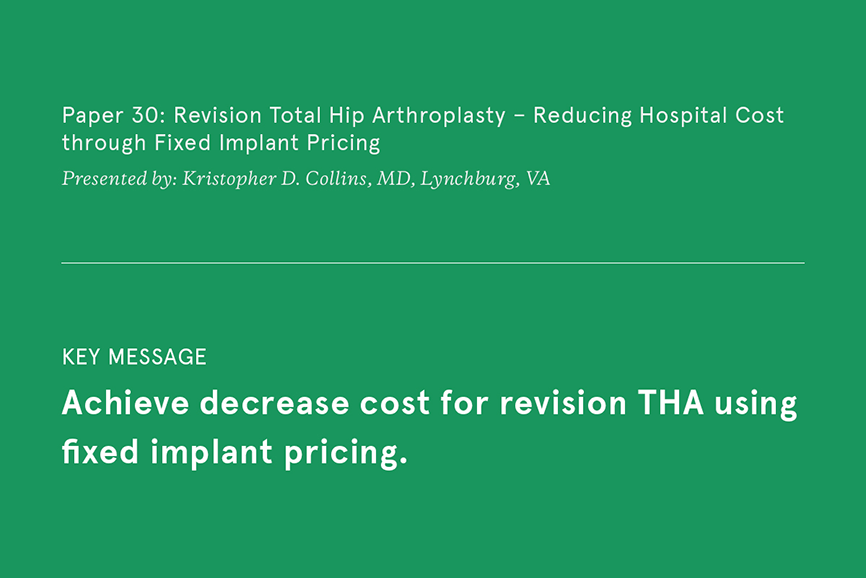

A slide titled โ€œPaper 30: Revision Total Hip Arthroplasty โ€“ Reducing Hospital Cost through Fixed Implant Pricing,โ€ highlighting how PROs validate research showing decreased costs for revision THA with fixed implant pricing.

Paper 30: Revision Total Hip Arthroplasty โ€“ Reducing Hospital Cost through Fixed Implant Pricing


Green slide summarizing medical research. Title highlights the impact of patient-reported allergies on outcomes after hip and knee arthroplasty. Key message: More allergies equal lower satisfaction after TJA, as PROs validate research findings.

Paper 33: Patient-reported Allergies: Does the Number of Allergies Affect Outcomes Following Primary Total Hip and Knee Arthroplasty?


Paper 38: Predicting the Incremental Hospital Cost of Adverse Events among Medicare Beneficiaries in the Comprehensive Joint Replacement Program

Schedule A Call With a PRO Expert!